Author: Justice

  • Nutrition Wonderland’s 2009 Tour of America

    Nutrition Wonderland is taking to the road this Fall to cover the newest developments in the worlds of integrative medicine, nutrition and sustainable agriculture. Below is the official Google Map of our journey – it is an interactive map so feel free to zoom in and check out the whole path.


    View Nutrition Wonderland’s Tour of America – 2009 in a larger map

    We are beginning our survey out in Los Angeles on the West Coast in late September and continue across the United States’ desert southwest into Texas by early October, up through America’s breadbasket in the Great Plains in time for Halloween, examine the hotbed of organic agriculture in the upper Midwest and then head back towards the East Coast and Washington, DC by mid-late November. We should cover roughly 4,000 miles (6K/km) and talk with numerous people and organizations at the forefront of the radical changes going on in medicine and agriculture. If you follow our coverage the whole way, you will begin to see the synergies between the fields and the new way forward they are lighting.

    From Two, Comes One

    One factor in deciding to chronicle where ‘things‘ are with these fields at this particular time has to do with a recent evolution in the approach opinion leaders and policy makers are starting to adopt. Sustainable agriculture blog Civil Eats recently advocated for health care reform while The Integrative Medicine Foundation suggests implementing a sustainable agriculture component as a necessary part of establishing better health care in sub-Saharan Africa. These are not isolated incidents. Many of our stories have been outlining a similar vision, as we have described efforts to reform health care into a proactive system and the ways in which nutrients and diet impact diseases like autism.

    It would appear that the worlds of sustainable agriculture and integrative medicine have started, ever so slowly, to merge.

    The driving force behind this synergy has been the growing awareness that we have a severely broken food system in the United States – and it is a major reason our health care system costs dwarf that of any other industrialized nation on earth. Recent movies like Food Inc and King Corn have exposed the public to the underbelly of industrial agriculture but the connections between compromised growing methods and obesity rates or pesticides and birth defects are just now emerging amongst the public.

    Many proponents of one field inevitably come to see the other as advocating a similar role call of changes. Reductions in harmful agricultural chemicals that effect reproductive health, reform of agricultural and health care insurance incentive structures, limiting large corporate agribusiness and pharmaceutical interests and developing more localized farmers and practitioners networks underscore the overlap between these fields.

    And this development is a logical, even necessary trend. Traditional fields of agriculture and medicine are evolving to better address growing populations that continue to exist on a planet of finite resources. With time, these cutting edge developments will be folded into the mainstream. For now though, these developments are very much new and represent a still premature movement. How they evolve is unknown but we hope to give you a much clearer insight into how they will increasingly combine to represent a new approach to how we live on the planet.

    What We Are Doing

    Our journey aims to survey some of the newest developments in both fields, highlighting how the advancement of both sustainable agriculture and integrative medicine will bring all of us closer to the goal of healthier people on a healthier planet. Below is a list of organizations, locations and people we are in the process of organizing for our trip:

    • Leafy Greens Marketing Association – Sacramento, CA
    • Farms Reach – San Francisco, CA
    • Frank Ford, founder of Arrowhead Mills – Irvine, CA
    • Desert Agriculture – Blythe, CA
    • University of Arizona – Integrative Medicine Center – Tuscon, AZ
    • Gallup Indian Medical Center – Gallup, NM
    • Sunstone Herb Farm – Albuquerque, NM
    • Santa Fe Tree Farm – Santa Fe, NM
    • Plano Community Garden – Plano, TX
    • Food Democracy Now – Clear Lake, IA
    • Iowa State University Sustainable Agriculture Program – Ames, IA
    • Organic Valley Foods – LaFarge, WI
    • Growing Power – Chicago, IL
    • Rodale Institute – Kutztwon, PA

    This is just the preliminary list and it will constantly be updated so check back in regularly. If you are involved in any of these fields and find yourself geographically close to the path we are blazing, drop us a line at [email protected] and we will do our best to drop in to see you and learn about what you are doing.

  • Brain Food: Nuts! (Part 1)

    Brain Food: Nuts! (Part 1)

    Many supplement pills or health foods claim to boost brain power – all you have to do is pay an arm and a leg for their product. The advertising divisions are counting on the fact that consumers don’t really know what’s in their foods or what compounds are the ones that boost their brains. And, since everyone wants a mental edge, whether it be for work or school, many people fall victim to clever marketing and outrageous ad claims. But, luckily, you read Nutrition Wonderland – so you know that you don’t have to pay some corporation for good nutrition. If you want some healthy brain-boosters, all you have to do is take a trip to the grocery store.


    Squirrel nuts away like this guy, thanks to flickr user Noël Zia Lee

    Many foods are packed with compounds that help boost memory, concentration, motor skills, and mental clarity. Some even have shown to help prevent brain degenerative diseases like Alzheimer’s. Most importantly, all these brain super-foods can be found at a supermarket – you just have to know what to look for! Here are some easy items from the nut family you can add to your diet to get the most out of your mental muscle without breaking the bank.

    Go Nuts

    All kinds of nuts have been shown to be great brain boosters. The main reason nuts and seeds are so good for our minds is that they’re chock full of Vitamin E, particularly almonds and hazelnuts. “Vitamin E” is not actually one specific compound – it’s the collective name for a group of fat-soluble compounds with distinctive antioxidant activities. Antioxidants are the compounds which protect our bodies from damaging themselves, allowing cells to function better and stay healthier longer. It’s said that Vitamin E, compared with other antioxidants, are the ones which most readily enter cells, and thus are effective at low doses.

    The Hazelnut – your source for Vitamin E

    Vitamin E has been linked to all kinds of great protective effects in the brain, from preventing disease to improving brain power. One study, published in the New England Journal of Medicine, found that supplemental dietary vitamin E delayed the progression of the Alzheimer’sAnother study found that Vitamin E and C together protected older Japanese men from dementia and improved their overall cognitive function. Of course, nuts aren’t the only foods with Vitamin E. You’ll find quite a bit of it in:

    • broccoli
    • kiwi
    • avocados
    • spinach
    • vegetable oils
    • whole grain foods

    Nuts also have more to offer than just Vitamin E. Walnuts, for example, have been found to be a great brain food, but they don’t have a whole lot of Vitamin E. Instead, they’re packed with Omega 3 fatty acids – the same compounds found in high concentrations in intelligence-boosting fish. Over 2,000 scientific studies  demonstrate the incredible range of problems associated with a lack of Omega 3s – of which walnuts and fish are pretty much our only common dietary sources – and even still scientists estimate that 60% of Americans have diets that are deficient in Omega 3 fatty acids, and about 20% of Americans so low on these key lipids that blood tests won’t even detect Omega 3s in their blood.

    The brain is complicated – so check out how it works to understand why you need to feed it correctly:

    You have to understand – the brain is 60% fat. You need fats to keep the brain functioning and working well, and not all fats are created equal. Fill yourself with junk food and your brain will consist of more junk fat. For the mind, the best are those Omega 3 fatty acids found in walnuts and fish. These fats end up in the nerve cell membranes and work to make them more fluid, which allows them to be more responsive to cellular signals and make them more efficient at sharing and receiving information. One study, published in the British Journal of Nutrition, found that a diet which includes 1 ounce of walnuts a day (7-9 of them) can improve balance, coordination and spatial memory – at least in rats.

    Nuts and Neurotransmitters

    Walnuts also contain phosphatidylcholines, a group of lipids which are major components of membranes and can be cut to give choline, a key part of the neurotransmitter acetylcholine, which helps speed up the signal transmission between brain cells, allowing your brain to process and store information much faster.

    Peanuts and pecans are also packed with choline. Other nuts and seeds, like pumpkin and sunflower seeds, contain high levels of tryptophan, an amino acid key to making seratonin. Sunflower seeds are also particularly great because they have high levels of thiamine, a B vitamin important for memory and overall brain power.

    Here is a great little video to help show you whats going on in your brain (you want to help this electrical storm out!):

    Almonds, part of the solution

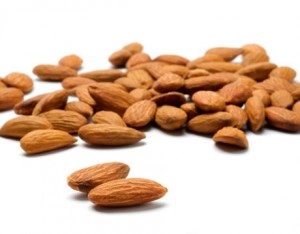
    Almonds contain phenylalanine, which unlike other compounds crosses the blood-brain barrier easily, and has been shown to alleviate Parkinson’s Disease and boost the neurotransmitters dopamine and adrenaline. Dopamine levels are important for good memory, attention, and problem solving skills, and adrenaline is linked to focus and attention as well as energy. Cashews have magnesium, which helps dilate the blood vessels in our bodies allowing more oxygenated blood to nourish our neurons. In general, just about every nut has a brain-boosting effect outside the generally high Vitamin E levels.

    Keep in mind, though, that nuts, while chock full of goodies, are also high in calories – so don’t overdo them. Also, you can have too much of a good thing: some of the studies which looked at nut doses found that really high doses actually impaired the brain, whereas moderate doses improved it. So sticking with a couple ounces of nuts and seeds a day as a snack is probably better than replacing an entire meal with them.

    This article is the first part of a two part series on Brain Food – you may find the next article on berries and greens helpful.

    References:

    1. Sano M, Ernesto C, Thomas RG, Klauber MR, Schafer K, Grundman M, Woodbury P, Growdon J, Cotman CW, Pfeiffer E, Schneider LS, & Thal LJ (1997). A controlled trial of selegiline, alpha-tocopherol, or both as treatment for Alzheimer’s disease. The Alzheimer’s Disease Cooperative Study. The New England journal of medicine, 336 (17), 1216-22 PMID: 9110909
    2. Masaki KH, Losonczy KG, Izmirlian G, Foley DJ, Ross GW, Petrovitch H, Havlik R, & White LR (2000). Association of vitamin E and C supplement use with cognitive function and dementia in elderly men. Neurology, 54 (6), 1265-72 PMID: 10746596
    3. Willis, L., Shukitt-Hale, B., Cheng, V., & Joseph, J. (2008). Dose-dependent effects of walnuts on motor and cognitive function in aged rats British Journal of Nutrition, 101 (08) DOI: 10.1017/S0007114508059369
  • Food Safety – The US Policy Dimensions of HR 875 and HR 759

    Food Safety – The US Policy Dimensions of HR 875 and HR 759

    ith the recent spat of recalls surrounding pistachios and peanut butter in the US, there has been a large response from the public to better safeguard the food supply. Industry is also starting to warm up to the idea because the cost of recalls are enormous. Food lawyer Bill Marler puts the cost of just the peanut recall alone at $1 billion dollars.

    The cries for change come amid another small scale outbreak observed in April 2009 regarding alfalfa sprouts in the NE US (follow the link for more information from the FDA).

    With all this tainted food floating around the food supply, the US congress says it wants change. The first step towards change has been the now familiar hearing between corporate officers and a Congressional subcommittee. You can see some of the testimony about the salmonella outbreak in peanuts here:

    Out of these meetings has come different ways to address the public’s concerns. Here we review some of the options currently being discussed against the wisdom of some leading food safety professionals.

    HR 875

    The most hyped up pronouncement from Congress has been HR 875. Introduced by Rep. Rosa DeLauro (D-Conn), the Food Safety Modernization Act of 2009 is a response to all the food safety crises that have happened in the first part of this year. The bill has gotten a lot of press in the last couple weeks and most of it has been negative.

    Red State – Blue State, together on HR 875

    All political ideologies seem to be enraged by this bill. The far left sustainable agriculture crowd is noticeably upset that the bill lumps together factory farming operations with local agriculture, making everyone submit to the same rule set. The far right group Reason asks about HR875′s impact on the ability to farm for yourself. This bill was also prominently featured in many of the politically right ‘Tea Parties‘ that happened on tax day.

    Both sides seem to focus on just one provision in the legislation – Section 3, Article 14, where a food production facility is defined so broadly as to encompass everything from a dairy farm to your mother’s backyard. From the bill:

    “(14) FOOD PRODUCTION FACILITY- The term ‘food production facility’ means any farm, ranch, orchard, vineyard, aquaculture facility, or confined animal-feeding operation.”

    DeLauro came on the Huffington Post to defend her motives and dissuade some of this bad press, claiming the far right was responsible for a disinformation campaign. She essentially argues all these fears are bogus because the commerce clause of the US constitution – the one that allows the US congress to regulate trade in the first place – only applies to interstate trade, not hyper-local farms and neighborhood gardens. (Unfortunately, that strict constructionalist view of the constitution has not been upheld by the Supreme Court, so DeLauro, et al. would need to formally make a provision for them in the legislation to get passed this political impasse.)

    The senator also posted a rebuttal to all this criticism on her own website. You can view it here:

    A Way Forward?

    Once you get beyond the political dimension, the big takeaway from HR 875 is that it would split the FDA into two new government agencies. A ‘Food Safety Administration‘ would be formed inside of the existing Department of Health and Human Services (HHS) and be in charge of all things food while the FDA would largely turn into a ‘Drug Administration‘ with each new agency holding exclusive sway over their own fiefdoms. This is radical departure from the current system which uses a patchwork of provisions in many agencies across the government.

    This dual agency approach is largely applauded by the farming activist circuit, despite all the bad press this bill has gotten. Food and Water Watch tentatively agree with the position and so do the Trust for America’s Health + Robert Wood Johnson Foundation but problems still remain with this approach.

    Many food safety functions are carried out by the USDA and since HR 875 only addresses the FDA, most meat products (beef, fish, chicken, etc) would languish inside of our old system. Not to mention, the local dimension to food safety remains noticeably absent in HR 875, as no specific provisions for that group are included.

    H.R. 759

    The other major bill before Congress is H.R. 759The Food and Drug Administration Globalization Act of 2009. This is a different approach at fixing food safety by modifying the FDA extensively, giving the agency far more authority to conduct inspections and take action based on what it finds while keeping it intact. But, in an even deeper blow to local farming, the rules of HR 759 apply generally to all size farms and restaurants, which obviously tips in favor of large-scale farming. Even worse, the FDA’s increased surveillance costs are shouldered by the very farmers they are evaluating. Parts of the bill get extremely complicated in how these fees are determined but here is a sample from the top section:

    SEC. 741. FACILITY REGISTRATION FEE.

    ‘(a) In General- The Secretary shall assess and collect a fee for a facility registration under section 415 to defray increases (as described in subsection (f)(2)(A)(ii)) in the costs of inspecting establishments registered under section 415 and for related activities to ensure compliance by such establishments with the requirements of this Act relating to food (including increases in such costs for management of information, and the acquisition, maintenance, and repair of information technology resources).

    Some of the language is so vague that local farmers might have reason to be concerned. These fees very wildly depending on what kind of an operation each farm and restaurant turn out to be; later in the bill it explains how these fees scale – a process that will likely see great change in the sausage maker of Capitol Hill. Additional costs from this bill are also substantial inside each farm and restaurant, as it extends electronic bookkeeping to these establishments for the first time.

    Money, money, money

    In this bill’s implementation, all of these fees are heavily tilted toward industrialized, large scale agriculture. These fees will likely be a far lower percentage of their gross income; think of these fee provisions as regressive farm taxes. With closer inspection, HR 759 looks far more dangerous to local farming than HR 875 – and because it takes a more pragmatic approach to revising the FDA, Food and Water Watch thinks it has a much better chance of passing.

    Other Dimensions

    Leading researchers from The George Washington University take a different path than any of these bills. They advocate for a similar system to HR 875 (link is a long read) but even more extensive, pulling departments from other agencies like the CDC and the USDA into the fold. They still concentrate food safety into the HHS department in their excellent position paper. Here are some of the major ideas from the paper:

    “Congress should direct the Secretary of HHS to create, in collaboration with the states, a National Foodborne Illness Data Program.”
    “Congress should establish and fund an intergovernmental Food Safety Leadership Council
    (FSLC) through which the federal government would collaborate with state and local
    governments to design and implement an integrated national food safety system”
    “Congress should establish traceability requirements that permit federal, state, and local officials to rapidly obtain from food companies reliable information on the source of commodities, ingredients, and finished products.”

    The way they advocate for local involvement is far different from any federal approach, and it appears to be based on good research evaluating how the system currently works in the real world.

    What’s Next?

    Connecting a new food safety system to existing local agencies appears to be a crucial step most of the currently pending approaches before the Congress fail to address. Most recalls start on a local level so those stations need to be able to coordinate a response with federal officials, especially considering just how global the food supply is now. Other best practices safety implementations like the HACCP system Marion Nestle passionately supports need to be incorporated into whatever final legislation is adopted.

    Who is in charge of me?

    There is also the question of how phytochemical plant-based supplements/drugs would fall in this dichotomy. Right now, the FDA regulates food supplements very loosely, while putting many screws to any drug that claims to treat or prevent a disease. A semantic tip-toe has existed within these fields for years; the main difference between drugs and supplements is that supplements are directly sourced from food and herbs while drugs are proprietary creations from pharmaceutical companies. While there is already a supplement regulation act (however flawed it is), an expanded FDA or revised dual-headed Food Agency/Drug Agency setup could seriously change how we view this category of products – and it is a huge industry now. This issue could get very contentious.

    One thing is clear though – our current food safety system is not working. We need something better and if you read our last piece on food safety, you know many interested parties have been advocating for just such an overhaul for more than 20 years. Now is clearly the time as the public is finally focused on the issue. Many good ideas are floating around but just as many bad ones are as well. Let’s hope Congress is listening to the roar on the internet from HR 875 and they include protections for small scale agriculture.

  • Piven Sickened by Sushi’s Mercury

    Piven Sickened by Sushi’s Mercury

    Actor Jeremy Piven announced yesterday that he will leave the David Mamet play Speed-the-Plow because he has a mercury level running almost six times that of a normal person.

    Piven complained of fatigue and exhaustion since the play’s opening, which was back in early October. His doctor, Dr. Carlon M. Colker of Peak Wellness in Connecticut, said that all of Mr. Piven’s routine medical tests came back at acceptable levels, but, after reviewing what he knew about Piven – who liked to consume sushi sometimes twice a day – Colker decided to check Piven’s mercury levels.

    Jeremy Piven

    The results showed Piven was suffering from fatigue related to significant mercury exposure. He apparently decided to push on and continue to perform in Speed-the-Plow but that decision proved too ambitious. Later in the week, Piven was hospitalized for severe exhaustion after which his condition and his removal from the play was relayed to the production staff.

    Tough Crowd

    Public reactions were quick and sharp. Piven’s history as a bit of a Hollywood playboy have haunted him as this situation has unfolded. Some claim his departure is merely an excuse to leave the rigorous schedule Broadway demands. The playwright Mamet had this to say about his former star:

    “I talked to Jeremy on the phone and he told me that he discovered that he had a very high level of mercury. So my understanding is that he is leaving show business to pursue a career as a thermometer.”

    With the Hollywood mud flying, Dr. Colker went on ABC’s Good Morning America to try and clear the air for Piven.

    “We were very transparent about the fact that [Piven] had a mercury level that was shockingly high. It was almost six times the upper limit of the allowable reference range. He had very severe symptoms of fatigue and exhaustion at the beginning of the run of the show. We were basically going to tough it out and see how it went. I [Colker] acquiesced and let him go ahead and do that as we initiated treatments that were trying to get his mercury levels down.”

    Colker continued:

    “His symptoms had progressed, the neuromuscular fatigue began to come into play and, at that point, I would be remiss if I didn’t say ‘I think you need to step away from this’. Keep in mind, Jeremy is known as an absolute iron-horse when it comes to Hollywood and acting….It was up to me to step in and pull the reigns back in.”

    Mercury Toxicity – The Larger Story

    So the big question everyone wants to know is whether or not Piven is telling the truth or lying about the severity of his condition. Admittedly, the preliminary stages of mercury poisoning would be one of the easiest conditions to fake because, initially, it only exhibits itself in very strange ways that could easily be dismissed. General neuropathy (numbness), profuse sweating, raised heart rate and general fatigue are the most likely outward manifestations. Any of those conditions by themselves or even taken together can be casually dismissed, but they shouldn’t.

    Recall that in Dr. Colker’s interview above he mentioned the condition of “neuromuscular fatigue” and how it was starting to take a toll on Piven. What the good doctor was really talking about is the way mercury disrupts brain-to-muscle signaling.

    A synapse, where mercury attacks

    When Piven is out on stage, his brain, like yours, fires incredibly specific signals to key muscle groups so that he can perform. Neuromuscular junctions are where the brain ‘hands off’ its commands to the muscles – and this is where mercury comes into play.

    Mercury inhibits a key, relay neurotransmitter called acetylcholine, disrupting the way it normally binds and signals brain-to-muscle messages throughout the body. Bad signaling means the body has to work much harder to perform basic functions, resulting in an exhausting and seemingly unexplainable fatigue from which Piven was likely suffering.

    Beyond this initial stage of damage, mercury also severely disrupts the foundation of thought – neurons. The brain operates much like the microprocessor in your computer by firing a rapid symphony of tiny, neuronal-electrical signals throughout your body. Mercury can lay waste to the machine of your mind by literally tearing apart the electrical signaling equipment in your brain.

    Specifically, mercury ions bond with tubulin, the protective coverings that surround the electrical impulse-generating neurofibrils of each neuron. Those mercury ions cause the tubulin to literally disintegrate. Any neuron close enough to the mercury exposure suffers this fate. Worse yet, mercury’s fat solubility means that it tends to settle in the brain because the brain is the fattiest thing in your body, believe it or not. This video below shows just how destructive mercury is inside the body:

    Left untreated, severe mercury exposure can cause far greater problems by narrowing the field of vision, completely stopping all muscle function and even driving the afflicted to insanity – resulting in a fatal, tortured paralysis called Minamata’s Disease. Lest we forget, mercury plays a role in neurological disorders like Parkinson’s, Alzheimer’s and likely autism.

    Minimata – The final stage (Credit W.E. Smith)

    Obviously, Piven was a long way from any of these diseases but his extremely elevated mercury body burden makes it completely plausible that his fatigue was caused by the mercury from his sushi habit. Piven’s conditions of extreme fatigue and exhaustion that required a hospital stay fit the profile of mercury exposure very well. It is also highly unlikely a credentialed doctor would go on national TV, risk his career and lie about his patient being hospitalized. Considering all this, there is a very good chance Piven is telling the truth.

    Where does all this mercury come from?

    Beyond the Hollywood finger pointing, Piven’s condition is important because it could have easily been anyone else who casually enjoys eating fish that finds themselves in this same position. The real question for you needs to be why fish have so much mercury in the first place. The answer has far less to do with Hollywood’s trendy sushi joints and far more to do with West Virginia’s coal mines.

    Coal, the enemy of every climatologist worried about global warming, also pollutes our environment with significant amounts of mercury. The exact amount is hard to calculate but a 2005 statement by the EPA suggests at least 48 tons are released into the US atmosphere annually. Remember, this doesn’t even count China, who is estimated to open one or two new coal power plants every week.

    The mercury flying out of all these coal power plants is chemically transformed by bacteria into methylmercury once it finally falls back to the ground, often many miles from where it was emitted. Mercury first creeps into the water supply where it is absorbed by aquatic microorganisms. From here mercury works its way up the food chain in a process known as bioaccumulation.

    Your source for mercury

    The smallest sea creatures, plankton, feed off the microorganisms, which are later swallowed by bottom dwelling fish. These smaller fish get eaten by larger fish which are eventually eaten by human beings, transferring mercury up the food chain. Not surprisingly predatory fish like shark, swordfish and tuna that sit atop the aquatic food chain have the highest mercury concentrations (see a full list here). When we eat these fish, our bodies rapidly absorb the methylmercury – and we all find ourselves in a situation not too dissimilar from Piven.

    This situation could be different. Many techniques and technologies currently exist that can take out 95%+ of the mercury emitted from coal power plants. Such a move would have dramatic, positive benefits across our society but regulatory agencies like the EPA have been extremely slow in promoting new standards for typical reasons like bureaucracy and corruption. Ironically, the EPA has recently been publicly criticizing the FDA for its lax guidance of mercury laden-fish, the pot calling the kettle black if ever such a situation existed.

    Still, the push for coal remains strong. Let’s hope Piven’s high-profile nature helps to create a real discussion about getting mercury out of the world’s coal plant’s, waterways, fish and our bodies.